

Time:2026-05-21

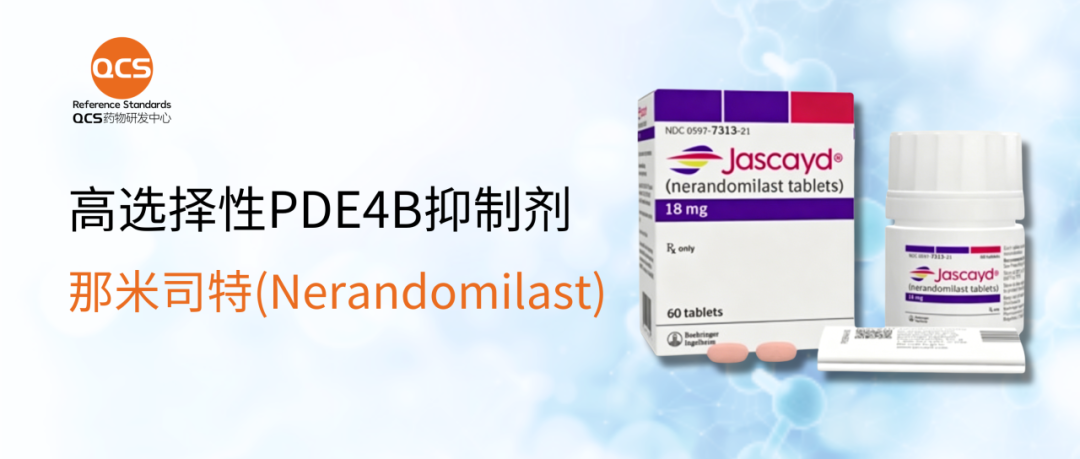
product presentation :
Nerandomilast is developed by Boehringer Ingelheim and marketed under the brand name Jascayd®.
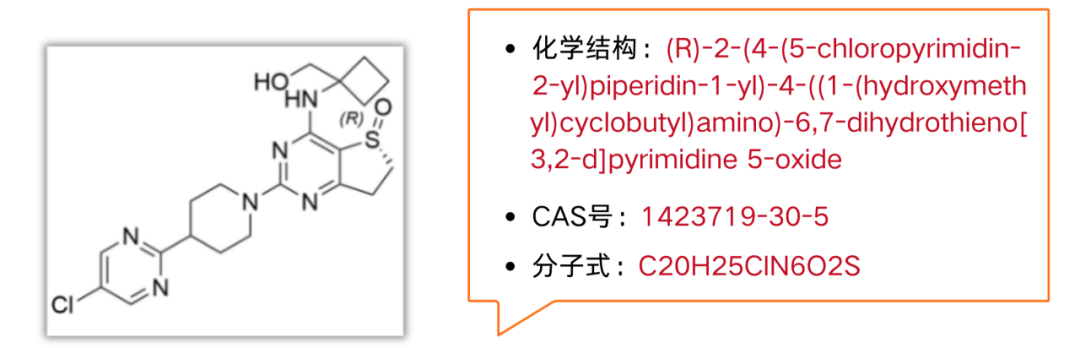
01 From the "Silent Respiratory Distress" to Targeted Intervention for Pulmonary Fibrosis
Idiopathic pulmonary fibrosis (IPF) and progressive pulmonary fibrosis (PPF) are fatal interstitial lung diseases characterized by progressive, irreversible decline in pulmonary function. Epidemiological data indicate that the median survival duration of IPF is only 2–3 years, with a 5-year mortality rate exceeding 50%, and its prognosis is even worse than that of many malignancies. Among patients with interstitial lung disease (ILD) other than IPF, 18%–32% progress to PPF, and the 5-year cumulative mortality rate in these patients also exceeds 50%.
Traditional treatments have significant limitations:
Over the past decade, only two anti-fibrotic agents (nintedanib and pirfenidone) have been approved for the treatment of idiopathic pulmonary fibrosis (IPF). However, there is insufficient robust evidence supporting their efficacy in reducing the "hard endpoint" of mortality risk, and some patients require dose reduction or discontinuation due to adverse effects such as diarrhea and abnormal liver function. Patients with moderate-to-severe pulmonary fibrosis have long faced a therapeutic gap, urgently requiring novel treatment options that are highly effective, safe, and accessible.
It is against this backdrop that Nerandomilast, as the world's first highly selective oral phosphodiesterase 4B (PDE4B) inhibitor, has provided a groundbreaking treatment option for patients with pulmonary fibrosis.
02 Mechanism of Action
Unlike traditional anti-fibrotic drugs that employ "single-target interventions," namisert's mechanism of action more closely resembles a "dual molecular switch" for precisely regulating both inflammation and fibrosis.
Namiste is a highly selective PDE4B inhibitor. PDE4B is one of the subtypes of the phosphodiesterase 4 family, which is highly expressed in lung tissue and closely associated with pulmonary fibrosis and inflammatory processes. By precisely inhibiting PDE4B, namiste elevates cAMP levels, thereby achieving a quadruple protective effect:
· Anti-fibrotic: Reduces fibroblast activation and scar formation, thereby delaying the progression of fibrosis.
· Immunomodulation: Inhibits inflammatory storms and improves the pulmonary microenvironment.
· Vascular protection: Improves pulmonary vascular function and reduces the risk of further lung damage.
· Epithelial protection: Safeguards the alveolar-capillary barrier, reducing exudation and tissue damage.
This intervention approach offers the following advantages:
o Intervene at the intersection of fibrosis and inflammatory signaling pathways
o The world's first and only anti-fibrotic drug proven by a large-scale Phase III study to demonstrate a trend toward reduced mortality risk.
o No routine monitoring of liver function is required, as the proportion of patients discontinuing medication due to diarrhea is as low as 1%.
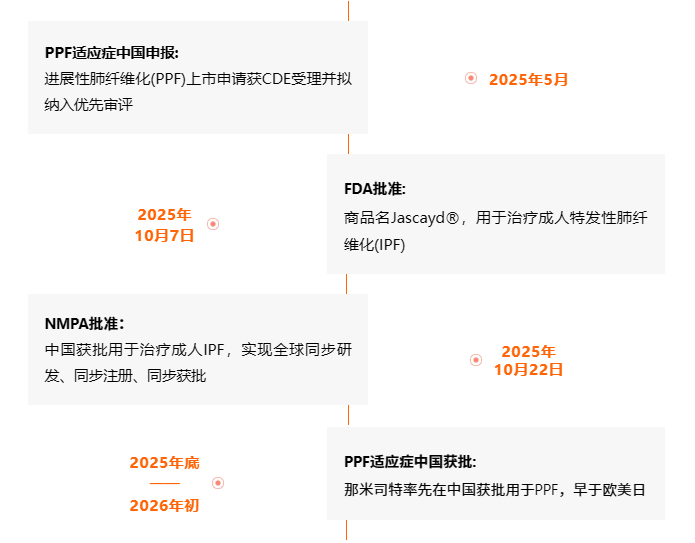
03 Listing Overview
With its twice-daily oral administration, dual-action mechanism, and outstanding clinical data, namisert has achieved significant progress in the global market:
Key Clinical Data
FIBRONEER™-IPF Phase III Trial: The first Phase III clinical trial for IPF to achieve the primary endpoint in a decade, breaking the decade-long stagnation in new drug approvals in this field.
The FIBRONEER™-ILD Phase III trial (published in NEJM): The namitist 18 mg group reduced the mortality risk by 49% and the risk of acute exacerbation by 38% in the overall PPF study population; in patients without prior nintedanib treatment, the mortality risk was reduced by 56%; in the autoimmune ILD subgroup, the reduction in mortality risk reached as high as 72%.
Early separation phenomenon: Separation occurs on the FVC curve as early as week 2 of treatment, with therapeutic efficacy remaining stable until week 76.
Advantages in East Asian populations: For East Asian PPF patients with non-UIP/UIP-like fibrosis phenotypes, FVC increased by 30.3 mL from baseline after 52 weeks of treatment.
Safety: The discontinuation rate due to diarrhea was as low as 1%, demonstrating safety profiles comparable to those of placebo.
04 Impurity Studies: Control System Based on ICH Guidelines
With the approval of namistat in China and the intensification of generic drug development efforts, impurity profile analysis and quality control have become pivotal components in IND/NDA submissions and consistency evaluations. The namistat molecule contains a chiral sulfoxide center, necessitating focused attention to the following aspects in its impurity control system:
1. Chiral impurities (controlled by sulfoxide stereoisomers)
2. Process-related impurities (introduced from the starting materials and by-products)
3. API degradation impurities (stability indicator)
4. Potential genotoxic impurities
Impurity studies require the use of reference standards with confirmed structures, which include process impurities, intermediates, and specific degradation products generated by forced degradation.
05 Analysis of Patent and Generic Drug Strategy Development
Analysis of Patent and Generic Drug Strategy Development
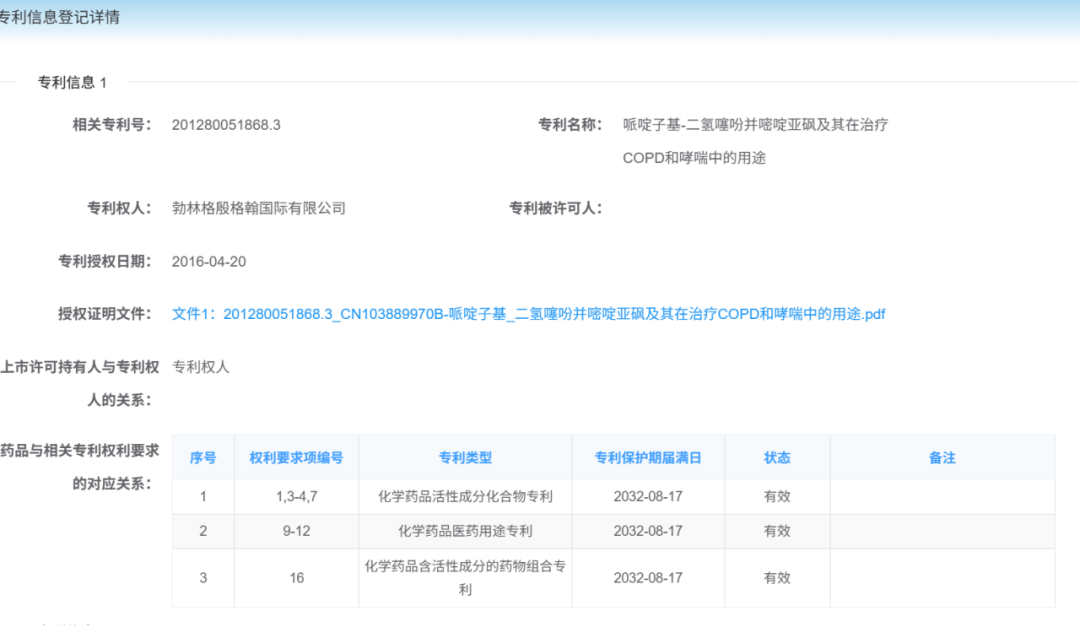
Recommendations for the development strategy of generic drugs
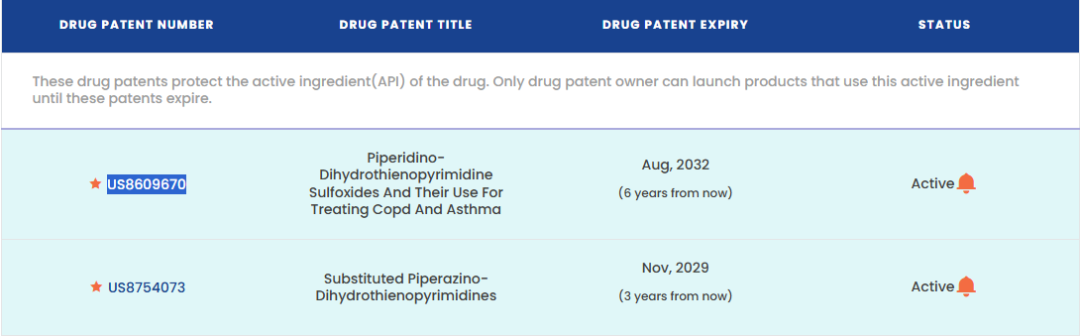
The patent for the core compound will expire in August 2032, with approximately six years remaining of protection. Generic drug manufacturers may begin preparing applications for an ANDA by the end of 2031. Special attention should be paid to potential subsequent patent developments regarding crystal forms, formulations, and indications. It is recommended to initiate impurity profile studies, develop chiral analysis methods, and conduct mandatory degradation testing in advance.
06 Summary
Namistimab, as the world's first highly selective PDE4B inhibitor approved for pulmonary fibrosis, represents a shift in therapeutic focus from "delaying the decline of lung function" to "reducing mortality risk." For researchers, a profound understanding of the structural characteristics of its chiral sulfoxide center and the establishment of a comprehensive control system covering chiral impurities, process-related impurities, degradation products, and genotoxic impurities are critical to ensuring drug safety and quality.
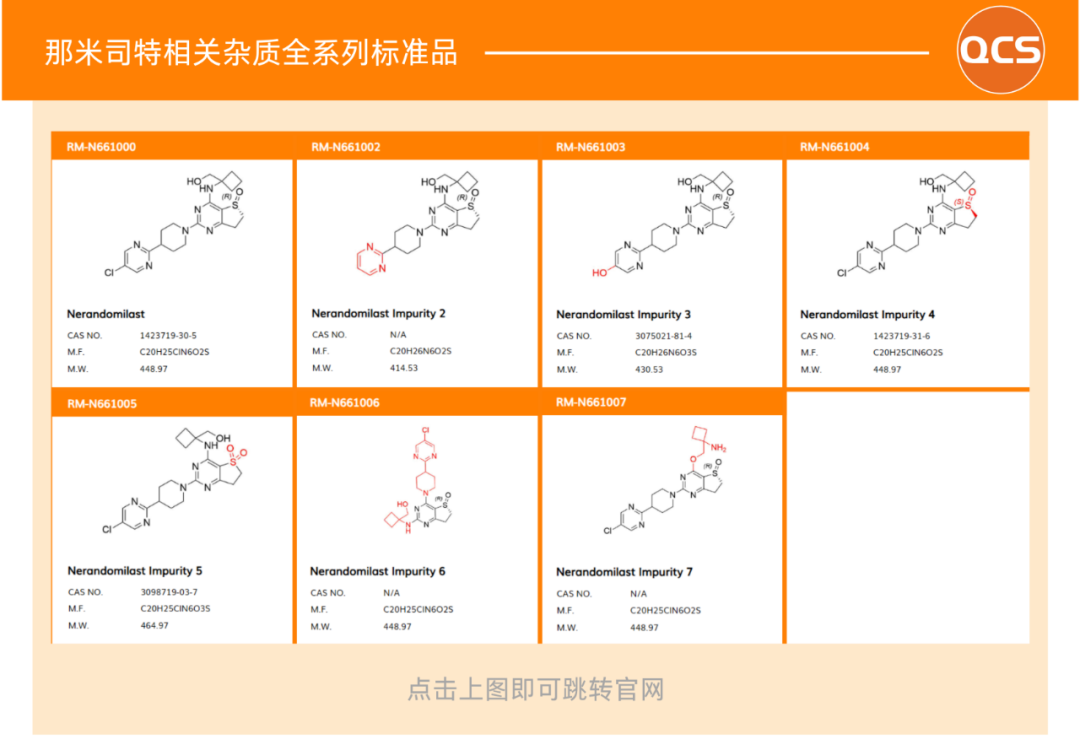
The patent for the core compound will expire in 2032, providing a clear timeline for the development of generic versions. Currently, QCS is already capable of detecting multiple impurities related to nerandomilast (as shown in Figure 1).
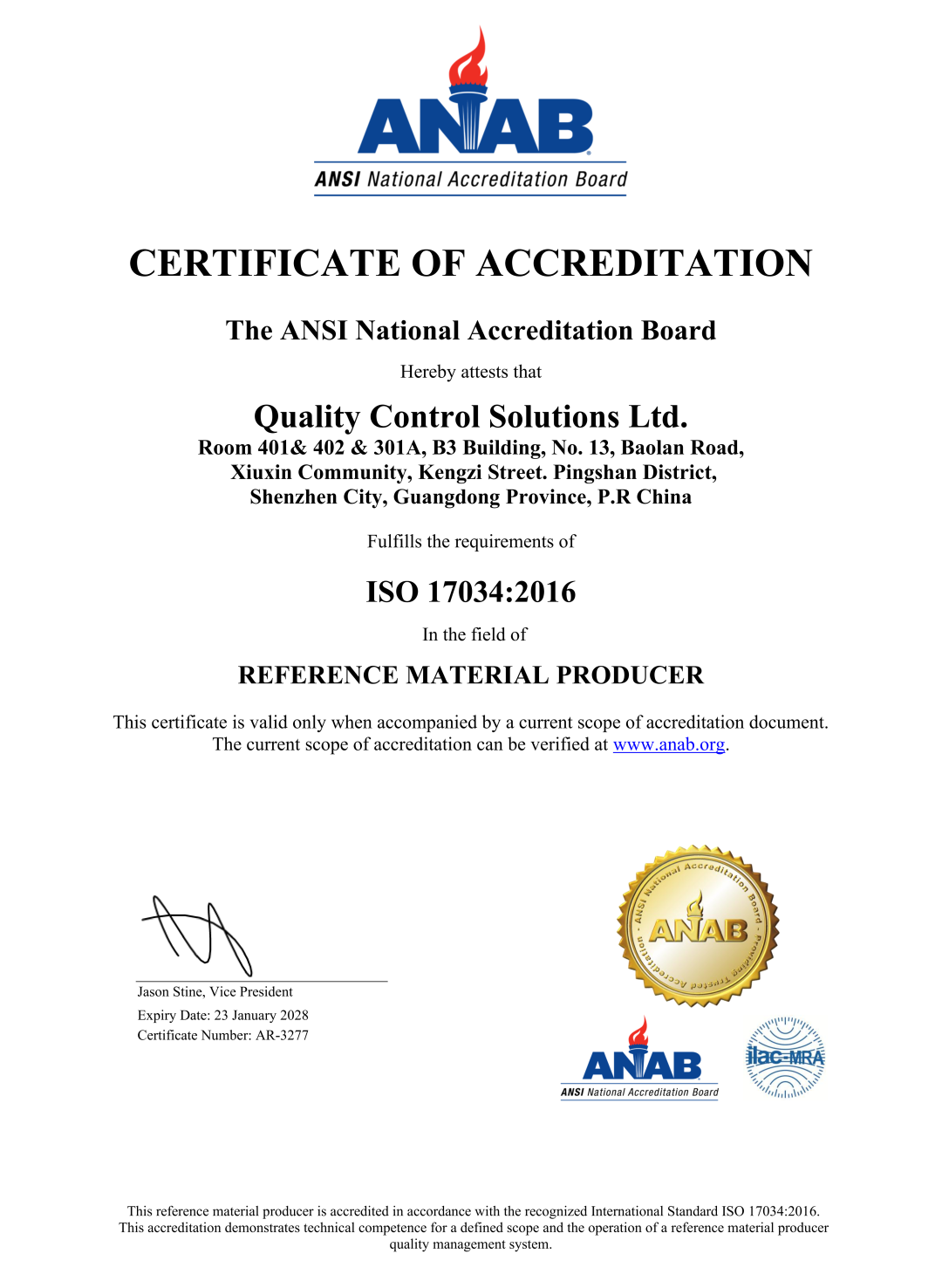
All impurity-containing products are accompanied by complete Quality Certificates of Analysis (COAs), which include structural confirmation data from NMR and MS analyses as well as purity determination results. The Quality Control Standards (QCS) have obtained ANAB ISO 17034 certification, with the production and standardization processes meeting international requirements for reference substance manufacturer capability accreditation, thereby providing internationally recognized data support for regulatory submissions to agencies such as the NMPA, EMA, and FDA.

product presentation :
Nerandomilast is developed by Boehringer Ingelheim and marketed under the brand name Jascayd®.
01 From the "Silent Respiratory Distress" to Targeted Intervention for Pulmonary Fibrosis
Idiopathic pulmonary fibrosis (IPF) and progressive pulmonary fibrosis (PPF) are fatal interstitial lung diseases characterized by progressive, irreversible decline in pulmonary function. Epidemiological data indicate that the median survival duration of IPF is only 2–3 years, with a 5-year mortality rate exceeding 50%, and its prognosis is even worse than that of many malignancies. Among patients with interstitial lung disease (ILD) other than IPF, 18%–32% progress to PPF, and the 5-year cumulative mortality rate in these patients also exceeds 50%.
Traditional treatments have significant limitations:
Over the past decade, only two anti-fibrotic agents (nintedanib and pirfenidone) have been approved for the treatment of idiopathic pulmonary fibrosis (IPF). However, there is insufficient robust evidence supporting their efficacy in reducing the "hard endpoint" of mortality risk, and some patients require dose reduction or discontinuation due to adverse effects such as diarrhea and abnormal liver function. Patients with moderate-to-severe pulmonary fibrosis have long faced a therapeutic gap, urgently requiring novel treatment options that are highly effective, safe, and accessible.
It is against this backdrop that Nerandomilast, as the world's first highly selective oral phosphodiesterase 4B (PDE4B) inhibitor, has provided a groundbreaking treatment option for patients with pulmonary fibrosis.
02 Mechanism of Action
Unlike traditional anti-fibrotic drugs that employ "single-target interventions," namisert's mechanism of action more closely resembles a "dual molecular switch" for precisely regulating both inflammation and fibrosis.
Namiste is a highly selective PDE4B inhibitor. PDE4B is one of the subtypes of the phosphodiesterase 4 family, which is highly expressed in lung tissue and closely associated with pulmonary fibrosis and inflammatory processes. By precisely inhibiting PDE4B, namiste elevates cAMP levels, thereby achieving a quadruple protective effect:
· Anti-fibrotic: Reduces fibroblast activation and scar formation, thereby delaying the progression of fibrosis.
· Immunomodulation: Inhibits inflammatory storms and improves the pulmonary microenvironment.
· Vascular protection: Improves pulmonary vascular function and reduces the risk of further lung damage.
· Epithelial protection: Safeguards the alveolar-capillary barrier, reducing exudation and tissue damage.
This intervention approach offers the following advantages:
o Intervene at the intersection of fibrosis and inflammatory signaling pathways
o The world's first and only anti-fibrotic drug proven by a large-scale Phase III study to demonstrate a trend toward reduced mortality risk.
o No routine monitoring of liver function is required, as the proportion of patients discontinuing medication due to diarrhea is as low as 1%.
03 Listing Overview
With its twice-daily oral administration, dual-action mechanism, and outstanding clinical data, namisert has achieved significant progress in the global market:
Key Clinical Data
FIBRONEER™-IPF Phase III Trial: The first Phase III clinical trial for IPF to achieve the primary endpoint in a decade, breaking the decade-long stagnation in new drug approvals in this field.
The FIBRONEER™-ILD Phase III trial (published in NEJM): The namitist 18 mg group reduced the mortality risk by 49% and the risk of acute exacerbation by 38% in the overall PPF study population; in patients without prior nintedanib treatment, the mortality risk was reduced by 56%; in the autoimmune ILD subgroup, the reduction in mortality risk reached as high as 72%.
Early separation phenomenon: Separation occurs on the FVC curve as early as week 2 of treatment, with therapeutic efficacy remaining stable until week 76.
Advantages in East Asian populations: For East Asian PPF patients with non-UIP/UIP-like fibrosis phenotypes, FVC increased by 30.3 mL from baseline after 52 weeks of treatment.
Safety: The discontinuation rate due to diarrhea was as low as 1%, demonstrating safety profiles comparable to those of placebo.
04 Impurity Studies: Control System Based on ICH Guidelines
With the approval of namistat in China and the intensification of generic drug development efforts, impurity profile analysis and quality control have become pivotal components in IND/NDA submissions and consistency evaluations. The namistat molecule contains a chiral sulfoxide center, necessitating focused attention to the following aspects in its impurity control system:
1. Chiral impurities (controlled by sulfoxide stereoisomers)
2. Process-related impurities (introduced from the starting materials and by-products)
3. API degradation impurities (stability indicator)
4. Potential genotoxic impurities
Impurity studies require the use of reference standards with confirmed structures, which include process impurities, intermediates, and specific degradation products generated by forced degradation.
05 Analysis of Patent and Generic Drug Strategy Development
Analysis of Patent and Generic Drug Strategy Development
Recommendations for the development strategy of generic drugs
The patent for the core compound will expire in August 2032, with approximately six years remaining of protection. Generic drug manufacturers may begin preparing applications for an ANDA by the end of 2031. Special attention should be paid to potential subsequent patent developments regarding crystal forms, formulations, and indications. It is recommended to initiate impurity profile studies, develop chiral analysis methods, and conduct mandatory degradation testing in advance.
06 Summary
Namistimab, as the world's first highly selective PDE4B inhibitor approved for pulmonary fibrosis, represents a shift in therapeutic focus from "delaying the decline of lung function" to "reducing mortality risk." For researchers, a profound understanding of the structural characteristics of its chiral sulfoxide center and the establishment of a comprehensive control system covering chiral impurities, process-related impurities, degradation products, and genotoxic impurities are critical to ensuring drug safety and quality.
The patent for the core compound will expire in 2032, providing a clear timeline for the development of generic versions. Currently, QCS is already capable of detecting multiple impurities related to nerandomilast (as shown in Figure 1).
All impurity-containing products are accompanied by complete Quality Certificates of Analysis (COAs), which include structural confirmation data from NMR and MS analyses as well as purity determination results. The Quality Control Standards (QCS) have obtained ANAB ISO 17034 certification, with the production and standardization processes meeting international requirements for reference substance manufacturer capability accreditation, thereby providing internationally recognized data support for regulatory submissions to agencies such as the NMPA, EMA, and FDA.
Join Our Email List
Subscribe to receive updates on new
products, promotions and resources!
Join Our Email List
Subscribe to receive updates on new
products, promotions and resources!
| ISO 17034:2016 |  |
| ISO 9001:2015 | |






 |
 |
 |
 |
*All our products are for R&D.
|
|
|
|
*All our products are for R&D.
Copyright © 2021-2024 QCSRM All rights reserved. 粤ICP备2023004355号
Copyright © 2021-2024 QCSRM All rights reserved.
粤ICP备2023004355号