

Time:2026-10-28
In August 2026 one approval dominated industry headlines: daraxonrasib (RMC-6236, brand name RASONQUE®), developed by Revolution Medicines, cleared the US FDA for advanced pancreatic cancer — becoming the first RAS(ON) multi-selective tri-complex inhibitor ever approved, and a genuine milestone for a target class long written off as undruggable.
| MOLECULE SNAPSHOT | |
| Generic name | Daraxonrasib |
| Code | RMC-6236 |
| Brand name | RASONQUE® |
| Mechanism | RAS(ON) multi-selective tri-complex inhibitor |
| Mutation coverage | KRAS G12D / G12V / G12R, NRAS, HRAS |
| Approved indication | Advanced pancreatic cancer (FDA, August 2026) |
| Key trial | Phase III RASolute 302 (ASCO 2026 Plenary Session; NEJM) |
Unlike covalent KRAS-G12C inhibitors, daraxonrasib forms a tri-complex with CypA and RAS, giving it broad activity across KRAS G12D, G12V and G12R as well as NRAS and HRAS. Results from the Phase III RASolute 302 study were presented in the plenary session at ASCO 2026 in May and published simultaneously in The New England Journal of Medicine. Daraxonrasib has pushed a target once considered undruggable to a new high-water mark.

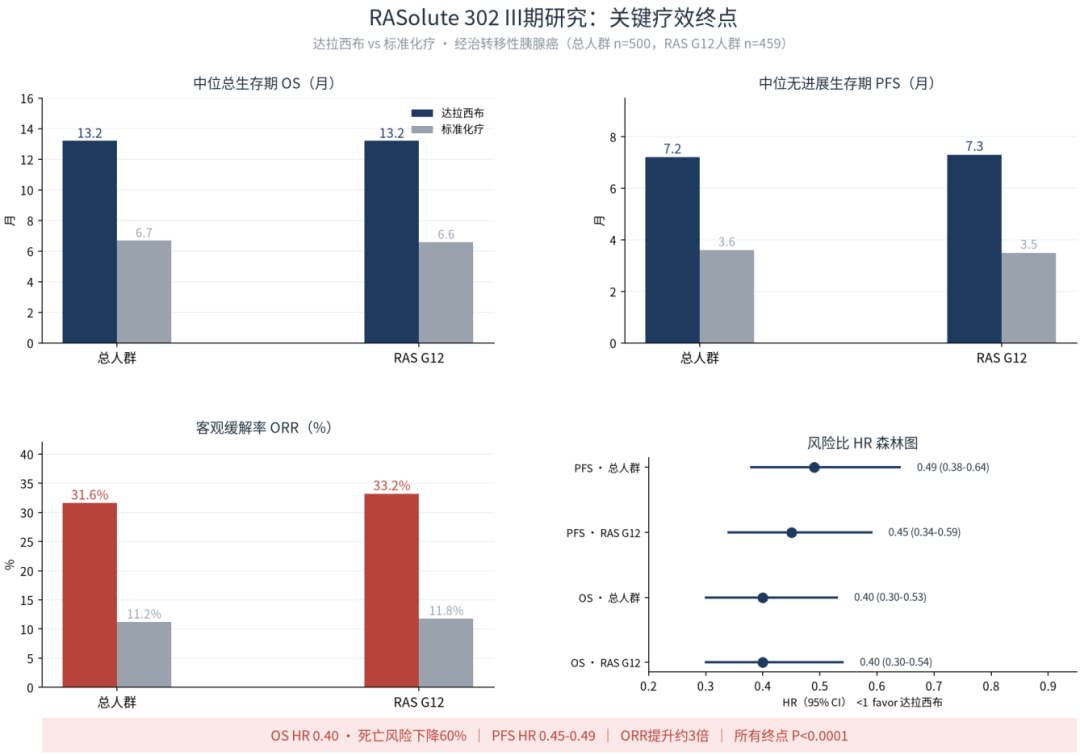
Asia has moved quickly too. On 10 August 2026 BeiGene signed a regional licensing agreement with Revolution Medicines covering exclusive development and commercialisation rights to four RAS(ON) inhibitors — daraxonrasib among them — across selected Asian markets including mainland China but excluding Japan and South Korea. A wave of me-too, me-better and generic programmes has followed.
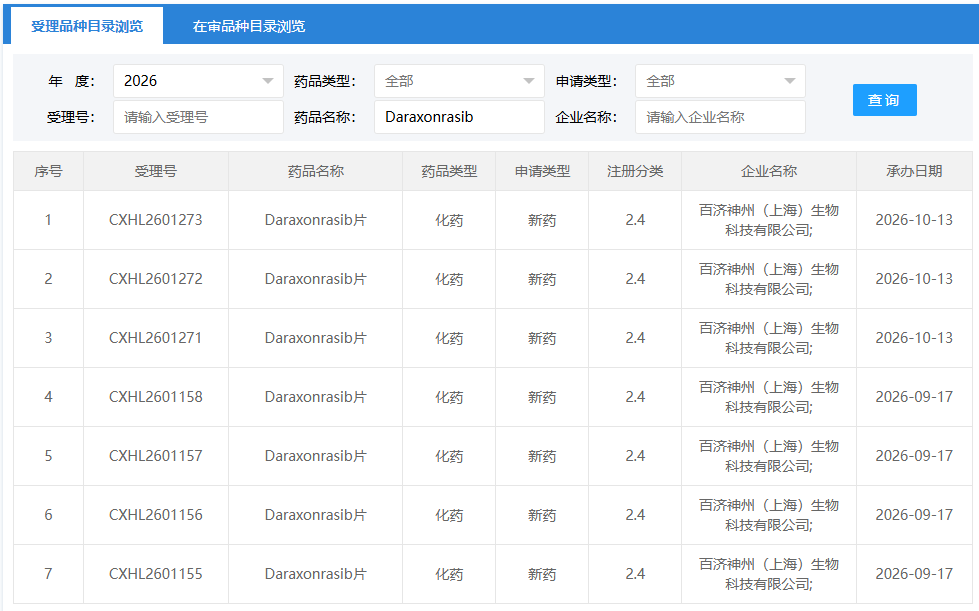
Behind the headlines, development teams face a far less photogenic question: this is a brand-new mechanism with no pharmacopoeial monograph and no established impurity profile. Where do the impurity reference standards come from?
Drawing on FDA filings, the NEJM publication and other public sources, we break down the five main difficulties in daraxonrasib impurity work and set out the impurity panel a programme needs.
| 1 | No pharmacopoeial monograph — the entire profile must be built from scratchNeither the USP, the EP nor the ChP monograph for daraxonrasib exists. There is no official impurity profile and no published source of reference standards, so every impurity must be independently elucidated and every analytical method independently developed — the single highest barrier in the programme. |
| 2 | A long synthetic route and an unusually wide range of process impuritiesThe molecule is structurally complex, with piperazine, indole and polyheterocyclic motifs. Its multi-step coupling sequence generates residual intermediates, regioisomers and stereoisomers, while dealkylation and cyclisation by-products form readily. The number of process impurities is high and isolation is difficult. |
| 3 | Sensitive physicochemical behaviour and pronounced degradation riskThe heterocyclic and piperazine groups are sensitive to moisture, pH and light. Under hydrolysis, oxidation and forced degradation the molecule produces oxidised impurities, hydrolytic cleavage products and N-oxides. Impurity levels shift markedly during stability studies, so a complete set of degradation standards is needed for method validation and for identification and assay of stability samples. |
| 4 | Structural alerts create genotoxic impurity pressurePiperazine and aromatic amine motifs are potential structural alerts, and the synthetic route uses alkylating reagents, so nitrosamine and alkyl-type genotoxic impurities must be assessed. Limits are extremely low, and the absence of commercial standards directly blocks CTD authoring and filing. |
| 5 | Chiral impurity controlThe molecule has multiple stereocentres. Chiral impurities bear directly on efficacy and toxicity and must be separated, identified and quantified — yet commercially available material is scarce. |
A complete impurity library for daraxonrasib development needs to cover four categories:
Process impuritiesKey intermediates from each step, side-reaction by-products, regioisomers and stereoisomers | Degradation impuritiesHydrolytic impurities, oxidation products, N-oxides and cleavage products |
Genotoxic-related impuritiesNitrosamine-type and alkylation-related structural alerts | Full impurity panelSupports forced degradation, stability studies and specification setting |
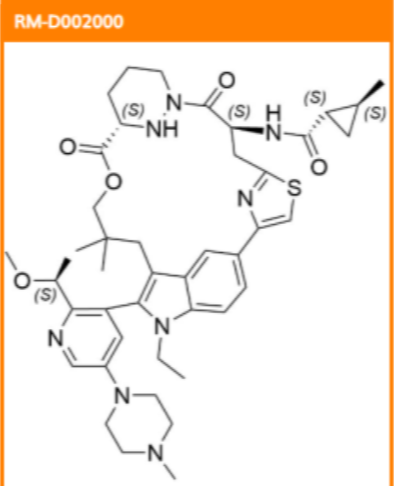
Keeping pace with global development, QCS has completed the synthesis, purification and value assignment of the daraxonrasib impurity series, covering mainstream process impurities, degradation impurities, chiral impurities and potential genotoxic impurities. 24 products are available, catalogue numbers RM-D002000 – RM-D002024.
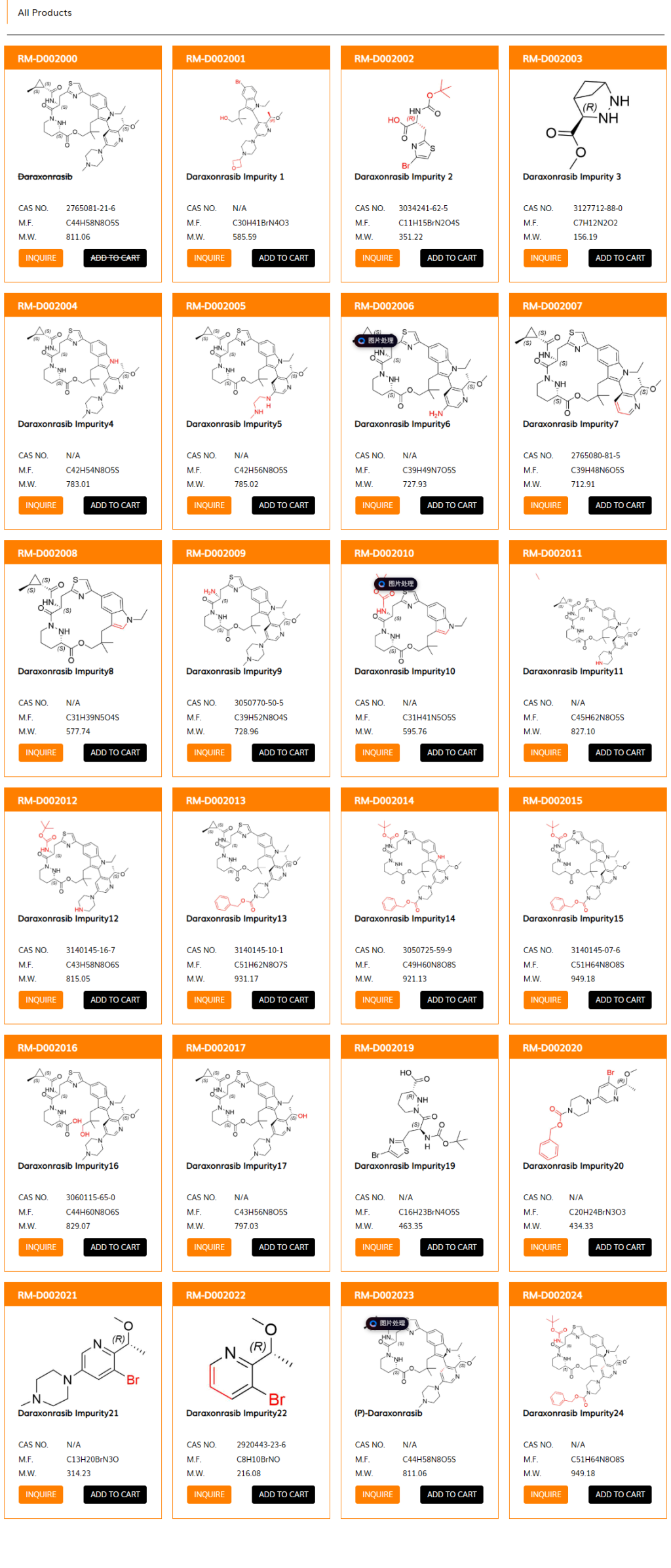
Catalogue overview showing the chemical structure, CAS number, formula and molecular weight of all 24 items
The same catalogue as a text table, where every catalogue number links to its product page:
| Cat. No. | Product Name | CAS No. | M.F. | M.W. |
|---|---|---|---|---|
| RM-D002000 | Daraxonrasib | 2765081-21-6 | C44H58N8O5S | 811.06 |
| RM-D002001 | Daraxonrasib Impurity 1 | N/A | C30H41BrN4O3 | 585.59 |
| RM-D002002 | Daraxonrasib Impurity 2 | 3034241-62-5 | C11H15BrN2O4S | 351.22 |
| RM-D002003 | Daraxonrasib Impurity 3 | 3127712-88-0 | C7H12N2O2 | 156.19 |
| RM-D002004 | Daraxonrasib Impurity 4 | N/A | C42H54N8O5S | 783.01 |
| RM-D002005 | Daraxonrasib Impurity 5 | N/A | C42H56N8O5S | 785.02 |
| RM-D002006 | Daraxonrasib Impurity 6 | N/A | C39H49N7O5S | 727.93 |
| RM-D002007 | Daraxonrasib Impurity 7 | 2765080-81-5 | C39H48N6O5S | 712.91 |
| RM-D002008 | Daraxonrasib Impurity 8 | N/A | C31H39N5O4S | 577.74 |
| RM-D002009 | Daraxonrasib Impurity 9 | 3050770-50-5 | C39H52N8O4S | 728.96 |
| RM-D002010 | Daraxonrasib Impurity 10 | N/A | C31H41N5O5S | 595.76 |
| RM-D002011 | Daraxonrasib Impurity 11 | 3140145-11-2 | C43H56N8O5S | 797.03 |
| RM-D002012 | Daraxonrasib Impurity 12 | 3140145-16-7 | C43H58N8O6S | 815.05 |
| RM-D002013 | Daraxonrasib Impurity 13 | 3140145-10-1 | C51H62N8O7S | 931.17 |
| RM-D002014 | Daraxonrasib Impurity 14 | 3050725-59-9 | C49H60N8O8S | 921.13 |
| RM-D002015 | Daraxonrasib Impurity 15 | 3140145-07-6 | C51H64N8O8S | 949.18 |
| RM-D002016 | Daraxonrasib Impurity 16 | 3060115-65-0 | C44H60N8O6S | 829.07 |
| RM-D002017 | Daraxonrasib Impurity 17 | N/A | C43H56N8O5S | 797.03 |
| RM-D002019 | Daraxonrasib Impurity 19 | N/A | C16H23BrN4O5S | 463.35 |
| RM-D002020 | Daraxonrasib Impurity 20 | N/A | C20H24BrN3O3 | 434.33 |
| RM-D002021 | Daraxonrasib Impurity 21 | N/A | C13H20BrN3O | 314.23 |
| RM-D002022 | Daraxonrasib Impurity 22 | 2920443-23-6 | C8H10BrNO | 216.08 |
| RM-D002023 | (P)-Daraxonrasib | N/A | C44H58N8O5S | 811.06 |
| RM-D002024 | Daraxonrasib Impurity 24 | N/A | C51H64N8O8S | 949.18 |
Note: “N/A” indicates that no CAS number has been publicly assigned to that impurity; QCS can provide structural confirmation and custom synthesis. Molecular formulae and weights follow the current product catalogue; the CoA supplied with each lot and its NMR, MS and HPLC data are the definitive reference.
View the full daraxonrasib standard range →
Stock and custom, in parallelRoutine impurities ship from stock; complex unknown and genotoxic impurities are available by custom synthesis. Routine impurities in 15 working days, complex molecules in about four weeks. | Full characterisation packageEvery lot ships with a complete set of NMR, MS and HPLC data. |
ISO 17034 quality systemValue-assignment reports meet the documentation requirements of innovative and generic filings, in China and overseas. | Technical support alongsideWe work with your team on impurity structure elucidation, method development and technical consultation. |
The race in the RAS field has begun. Daraxonrasib is the benchmark for tri-complex mechanism, and me-too and generic programmes will keep coming.
Impurity work is the gate every programme hits first — secure the full panel early and you keep the schedule.
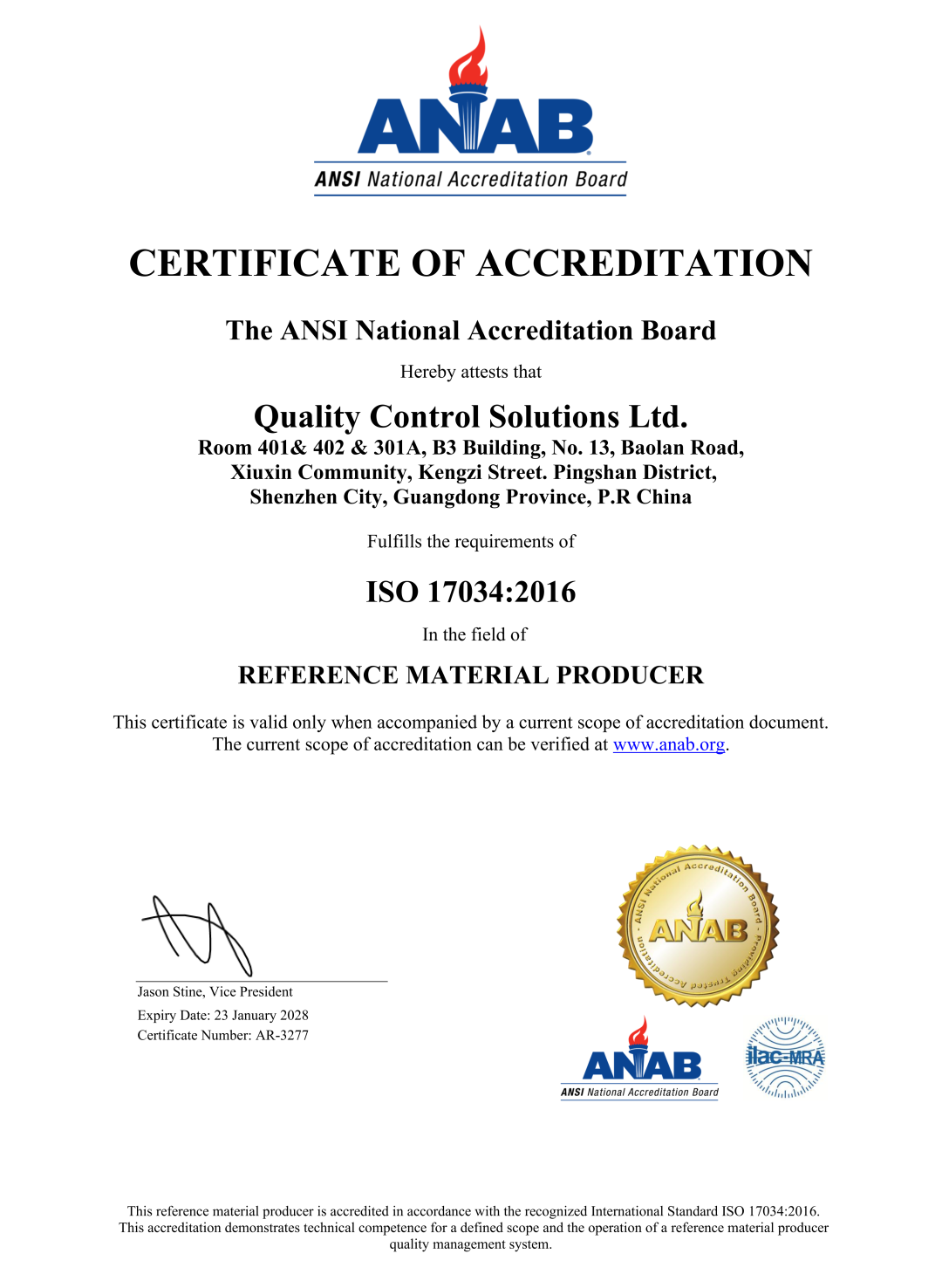
ANAB ISO 17034 QCS holds ANAB ISO 17034 accreditation. Our reference standard production and value assignment processes meet the international requirements for competence of reference material producers, providing data with international mutual recognition for NMPA, EMA and FDA submissions.
In August 2026 one approval dominated industry headlines: daraxonrasib (RMC-6236, brand name RASONQUE®), developed by Revolution Medicines, cleared the US FDA for advanced pancreatic cancer — becoming the first RAS(ON) multi-selective tri-complex inhibitor ever approved, and a genuine milestone for a target class long written off as undruggable.
| MOLECULE SNAPSHOT | |
| Generic name | Daraxonrasib |
| Code | RMC-6236 |
| Brand name | RASONQUE® |
| Mechanism | RAS(ON) multi-selective tri-complex inhibitor |
| Mutation coverage | KRAS G12D / G12V / G12R, NRAS, HRAS |
| Approved indication | Advanced pancreatic cancer (FDA, August 2026) |
| Key trial | Phase III RASolute 302 (ASCO 2026 Plenary Session; NEJM) |
Unlike covalent KRAS-G12C inhibitors, daraxonrasib forms a tri-complex with CypA and RAS, giving it broad activity across KRAS G12D, G12V and G12R as well as NRAS and HRAS. Results from the Phase III RASolute 302 study were presented in the plenary session at ASCO 2026 in May and published simultaneously in The New England Journal of Medicine. Daraxonrasib has pushed a target once considered undruggable to a new high-water mark.
Asia has moved quickly too. On 10 August 2026 BeiGene signed a regional licensing agreement with Revolution Medicines covering exclusive development and commercialisation rights to four RAS(ON) inhibitors — daraxonrasib among them — across selected Asian markets including mainland China but excluding Japan and South Korea. A wave of me-too, me-better and generic programmes has followed.
Behind the headlines, development teams face a far less photogenic question: this is a brand-new mechanism with no pharmacopoeial monograph and no established impurity profile. Where do the impurity reference standards come from?
Drawing on FDA filings, the NEJM publication and other public sources, we break down the five main difficulties in daraxonrasib impurity work and set out the impurity panel a programme needs.
| 1 | No pharmacopoeial monograph — the entire profile must be built from scratchNeither the USP, the EP nor the ChP monograph for daraxonrasib exists. There is no official impurity profile and no published source of reference standards, so every impurity must be independently elucidated and every analytical method independently developed — the single highest barrier in the programme. |
| 2 | A long synthetic route and an unusually wide range of process impuritiesThe molecule is structurally complex, with piperazine, indole and polyheterocyclic motifs. Its multi-step coupling sequence generates residual intermediates, regioisomers and stereoisomers, while dealkylation and cyclisation by-products form readily. The number of process impurities is high and isolation is difficult. |
| 3 | Sensitive physicochemical behaviour and pronounced degradation riskThe heterocyclic and piperazine groups are sensitive to moisture, pH and light. Under hydrolysis, oxidation and forced degradation the molecule produces oxidised impurities, hydrolytic cleavage products and N-oxides. Impurity levels shift markedly during stability studies, so a complete set of degradation standards is needed for method validation and for identification and assay of stability samples. |
| 4 | Structural alerts create genotoxic impurity pressurePiperazine and aromatic amine motifs are potential structural alerts, and the synthetic route uses alkylating reagents, so nitrosamine and alkyl-type genotoxic impurities must be assessed. Limits are extremely low, and the absence of commercial standards directly blocks CTD authoring and filing. |
| 5 | Chiral impurity controlThe molecule has multiple stereocentres. Chiral impurities bear directly on efficacy and toxicity and must be separated, identified and quantified — yet commercially available material is scarce. |
A complete impurity library for daraxonrasib development needs to cover four categories:
Process impuritiesKey intermediates from each step, side-reaction by-products, regioisomers and stereoisomers | Degradation impuritiesHydrolytic impurities, oxidation products, N-oxides and cleavage products |
Genotoxic-related impuritiesNitrosamine-type and alkylation-related structural alerts | Full impurity panelSupports forced degradation, stability studies and specification setting |
Keeping pace with global development, QCS has completed the synthesis, purification and value assignment of the daraxonrasib impurity series, covering mainstream process impurities, degradation impurities, chiral impurities and potential genotoxic impurities. 24 products are available, catalogue numbers RM-D002000 – RM-D002024.
Catalogue overview showing the chemical structure, CAS number, formula and molecular weight of all 24 items
The same catalogue as a text table, where every catalogue number links to its product page:
| Cat. No. | Product Name | CAS No. | M.F. | M.W. |
|---|---|---|---|---|
| RM-D002000 | Daraxonrasib | 2765081-21-6 | C44H58N8O5S | 811.06 |
| RM-D002001 | Daraxonrasib Impurity 1 | N/A | C30H41BrN4O3 | 585.59 |
| RM-D002002 | Daraxonrasib Impurity 2 | 3034241-62-5 | C11H15BrN2O4S | 351.22 |
| RM-D002003 | Daraxonrasib Impurity 3 | 3127712-88-0 | C7H12N2O2 | 156.19 |
| RM-D002004 | Daraxonrasib Impurity 4 | N/A | C42H54N8O5S | 783.01 |
| RM-D002005 | Daraxonrasib Impurity 5 | N/A | C42H56N8O5S | 785.02 |
| RM-D002006 | Daraxonrasib Impurity 6 | N/A | C39H49N7O5S | 727.93 |
| RM-D002007 | Daraxonrasib Impurity 7 | 2765080-81-5 | C39H48N6O5S | 712.91 |
| RM-D002008 | Daraxonrasib Impurity 8 | N/A | C31H39N5O4S | 577.74 |
| RM-D002009 | Daraxonrasib Impurity 9 | 3050770-50-5 | C39H52N8O4S | 728.96 |
| RM-D002010 | Daraxonrasib Impurity 10 | N/A | C31H41N5O5S | 595.76 |
| RM-D002011 | Daraxonrasib Impurity 11 | 3140145-11-2 | C43H56N8O5S | 797.03 |
| RM-D002012 | Daraxonrasib Impurity 12 | 3140145-16-7 | C43H58N8O6S | 815.05 |
| RM-D002013 | Daraxonrasib Impurity 13 | 3140145-10-1 | C51H62N8O7S | 931.17 |
| RM-D002014 | Daraxonrasib Impurity 14 | 3050725-59-9 | C49H60N8O8S | 921.13 |
| RM-D002015 | Daraxonrasib Impurity 15 | 3140145-07-6 | C51H64N8O8S | 949.18 |
| RM-D002016 | Daraxonrasib Impurity 16 | 3060115-65-0 | C44H60N8O6S | 829.07 |
| RM-D002017 | Daraxonrasib Impurity 17 | N/A | C43H56N8O5S | 797.03 |
| RM-D002019 | Daraxonrasib Impurity 19 | N/A | C16H23BrN4O5S | 463.35 |
| RM-D002020 | Daraxonrasib Impurity 20 | N/A | C20H24BrN3O3 | 434.33 |
| RM-D002021 | Daraxonrasib Impurity 21 | N/A | C13H20BrN3O | 314.23 |
| RM-D002022 | Daraxonrasib Impurity 22 | 2920443-23-6 | C8H10BrNO | 216.08 |
| RM-D002023 | (P)-Daraxonrasib | N/A | C44H58N8O5S | 811.06 |
| RM-D002024 | Daraxonrasib Impurity 24 | N/A | C51H64N8O8S | 949.18 |
Note: “N/A” indicates that no CAS number has been publicly assigned to that impurity; QCS can provide structural confirmation and custom synthesis. Molecular formulae and weights follow the current product catalogue; the CoA supplied with each lot and its NMR, MS and HPLC data are the definitive reference.
View the full daraxonrasib standard range →
Stock and custom, in parallelRoutine impurities ship from stock; complex unknown and genotoxic impurities are available by custom synthesis. Routine impurities in 15 working days, complex molecules in about four weeks. | Full characterisation packageEvery lot ships with a complete set of NMR, MS and HPLC data. |
ISO 17034 quality systemValue-assignment reports meet the documentation requirements of innovative and generic filings, in China and overseas. | Technical support alongsideWe work with your team on impurity structure elucidation, method development and technical consultation. |
The race in the RAS field has begun. Daraxonrasib is the benchmark for tri-complex mechanism, and me-too and generic programmes will keep coming.
Impurity work is the gate every programme hits first — secure the full panel early and you keep the schedule.
ANAB ISO 17034 QCS holds ANAB ISO 17034 accreditation. Our reference standard production and value assignment processes meet the international requirements for competence of reference material producers, providing data with international mutual recognition for NMPA, EMA and FDA submissions.
Join Our Email List
Subscribe to receive updates on new
products, promotions and resources!
Join Our Email List
Subscribe to receive updates on new
products, promotions and resources!
| ISO 17034:2016 |  |
| ISO 9001:2015 | |






 |
 |
 |
*All our products are for R&D.
|
|
|
*All our products are for R&D.
Copyright © 2021-2024 QCSRM All rights reserved. 粤ICP备2023004355号
Copyright © 2021-2024 QCSRM All rights reserved.
粤ICP备2023004355号